Alzheimer, Dementia Symptoms Infographic Graphics
As a graphic designer with years of experience in branding, marketing visuals, and digital product creation, I’ve come across countless design assets. One that stands out for its clarity and emotional resonance is the Alzheimer, Dementia Symptoms Infographic. This illustration offers a powerful visual language that can be adapted to various creative projects, especially those focused on health awareness, educational content, or community-driven initiatives.
First Impressions: A Visual Language of Empathy
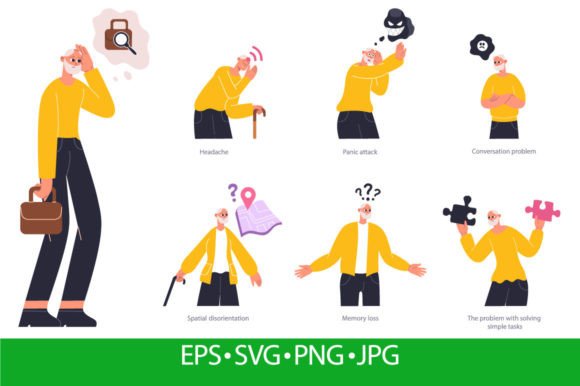
The Alzheimer, Dementia Symptoms Infographic immediately conveys a sense of solemnity and care. The vector illustration of an elderly man with memory loss and disorientation is both poignant and professional. The style is clean, with subtle details that make it feel authentic without being overly dramatic. It’s the kind of graphic that can evoke empathy while maintaining a level of sophistication suitable for commercial design.
This asset fits well in projects that require a balance between emotional storytelling and visual clarity. It’s ideal for small business branding, handmade products, or print-on-demand items targeting audiences interested in senior care, health education, or social impact campaigns.
Real-World Applications: From Branding to Print-On-Demand
In real design situations, the Alzheimer, Dementia Symptoms Infographic can serve as a strong visual anchor. Whether used in logo design, packaging, or social media graphics, it adds depth and context to a project. For example, a boutique product line selling memory aids or wellness tools could incorporate this infographic into their branding to reinforce their mission and connect with their audience on an emotional level.
It also works well in editorial design, such as blog visuals or magazine layouts focused on aging and mental health. As a printable design, it could be part of a downloadable resource pack for educators, caregivers, or support groups. In a Cricut project or sticker design, the simplicity of the vector illustration allows for easy customization and scalability.
For digital sellers, this asset could be included in a design bundle or Canva template, offering users a ready-to-use element that enhances their creative workflow. Its versatility makes it a valuable addition to any design library, especially for those working in the handmade business or small business branding space.
Where It Thrives: Large Layouts and Thematic Campaigns
The Alzheimer, Dementia Symptoms Infographic excels in large layout areas, such as hero graphics, product mockups, or campaign visuals. Its detailed yet restrained style makes it suitable for themed collections, where it can serve as a central motif or supporting element. When used in packaging design or t-shirt design, it adds a meaningful touch that aligns with the brand’s message.
As a decorative accent, it can enhance the visual mood of a project without overwhelming the overall composition. It also works well in editorial design, where it can illustrate articles or infographics related to aging, mental health, or caregiving.
Where to Use With Caution: Minimalist and Corporate Projects
While the Alzheimer, Dementia Symptoms Infographic is versatile, it may not be the best fit for minimalist branding or professional corporate materials. In these contexts, its emotional tone might clash with the need for a more neutral or modern design aesthetic. Similarly, in low-contrast designs or crowded layouts, the illustration could lose its impact and become visually confusing.
Designers should also be mindful of visual hierarchy when incorporating this asset. It works best as a supporting element rather than the main focus of a design, especially in projects that require clear communication and a strong brand identity.
Impact on Design Quality: Readability, Trust, and Engagement
The Alzheimer, Dementia Symptoms Infographic contributes to a design’s overall professionalism and emotional appeal. It helps build visual trust by offering a recognizable and meaningful image that resonates with the target audience. This is especially important in projects aimed at older adults or caregivers, where clarity and empathy are key.
When used effectively, it enhances audience engagement by adding a layer of storytelling to the design. It can also improve the perceived quality of a project, making it feel more polished and thoughtful. However, designers must ensure that the asset complements the overall visual direction rather than detracting from it.
Practical Designer Notes: Testing and Licensing
Before using the Alzheimer, Dementia Symptoms Infographic for a client project, it’s essential to test it in different scenarios. Preview it at small and large sizes to ensure it remains legible and visually appealing. Check how it looks on light and dark backgrounds, and consider its performance in black and white to assess contrast and detail.
If the asset includes PNG transparency or SVG editability, inspect those elements to confirm they meet your design needs. Test it alongside various font styles—serif, sans serif, script, or display—to see how it interacts with text and other graphical elements.
Finally, always verify the commercial license before using the asset for a client or business project. Make sure it’s compatible with your intended use, whether it’s for print-on-demand, digital products, or marketing visuals. This ensures that you’re fully compliant and that your client’s project remains legally sound.
Conclusion: A Thoughtful Addition to Your Design Toolkit
The Alzheimer, Dementia Symptoms Infographic is more than just a static image—it’s a thoughtful design asset that can elevate a wide range of creative projects. Whether you’re working on a handmade business, a small business branding initiative, or a digital product launch, this illustration offers a unique way to communicate complex ideas with clarity and compassion.
By understanding its strengths and limitations, designers can make informed decisions about when and how to use it. When applied with care, it can add depth, meaning, and professionalism to any design project, making it a valuable tool in the creative marketplace.